Strong winds and severe storms can put considerable pressure on a roof, potentially causing anything from loose tiles to damaged flashing and water ingress. Some problems are immediately visible, while others may only become apparent after rain enters through a weakened area.
For homeowners in Worksop, Nottinghamshire, knowing what to do after storm damage can help protect the property and ensure roofing problems are dealt with appropriately.
What Roof Damage Can Storms Cause?
Storm conditions can affect several parts of a roofing system. The type and extent of damage will depend on the roof’s age, construction, condition and exposure to the weather.
Common storm-related problems include:
- Missing or displaced roof tiles
- Cracked or broken tiles
- Loose ridge tiles
- Damaged flashing around roof junctions
- Loose or damaged guttering
- Blocked gutters and downpipes
- Damaged roof coverings
- Water entering through exposed areas
Even a small gap in the roof can allow rainwater to reach areas that are normally protected.
What Should You Do Immediately After a Storm?
The first step is to assess the situation safely from ground level. Look for obvious signs such as missing tiles, roofing materials in the garden or damaged gutters.
Do not climb onto the roof to investigate damage yourself. Wet surfaces, loose materials and unstable roof components can make an inspection hazardous.
Inside the property, check ceilings and upper walls for new damp patches, water marks or other signs of water ingress. If you notice anything unusual, note where it is occurring so that a roofing professional can investigate the area.
How Can You Tell If a Roof Has a Leak?
Some leaks are immediately noticeable during rainfall, while others develop gradually. Signs can include:
- Damp patches on ceilings or walls
- Water staining
- Peeling paint
- Dripping water
- A musty smell in upper rooms
- Damp insulation or roof timbers
A leak that stops after the rain has ended should not necessarily be considered resolved. Water may have entered beneath the roof covering and could continue affecting surrounding materials.
Which Roof Repairs May Be Needed?
The appropriate repair will depend on the source and severity of the damage.
Replacing Missing or Broken Tiles
Individual tiles that have slipped, cracked or been blown away can usually be dealt with by replacing the affected components and checking surrounding areas for further movement.
Repairing Ridge Tiles
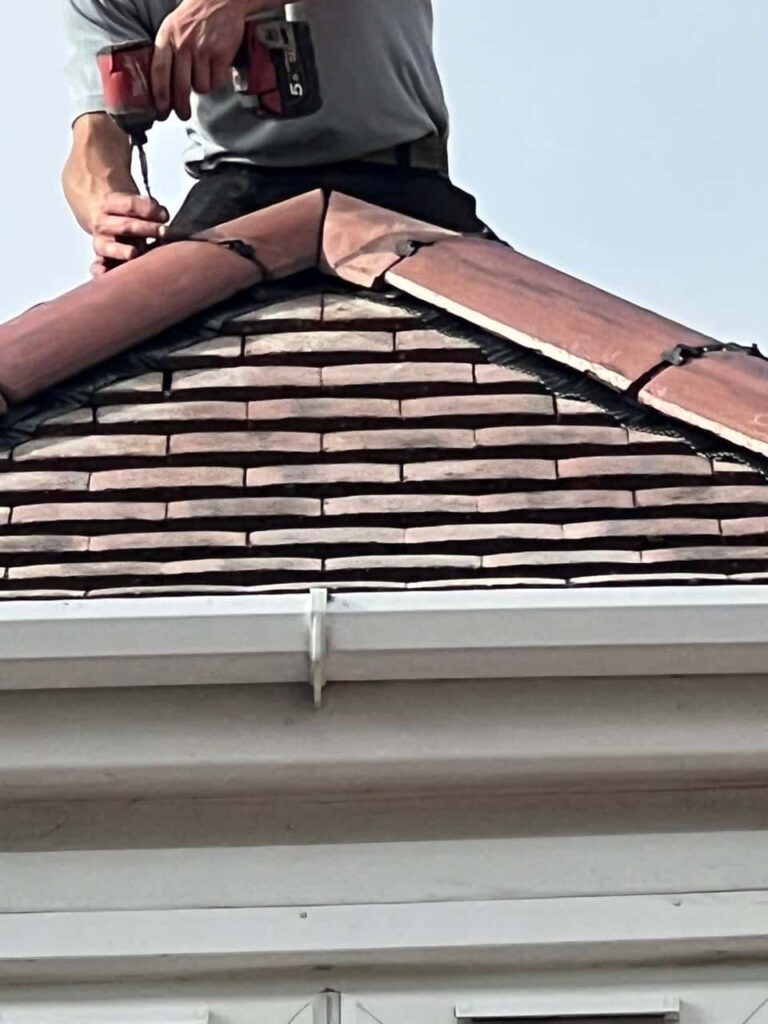
Ridge tiles are particularly exposed to strong winds. If they become loose or damaged, they may need to be carefully secured or repaired to restore the roof’s protection.
Repairing Flashing
Flashing around chimneys, walls and roof junctions can become loose or damaged during severe weather. Defective flashing can provide a route for rainwater to enter the roof and may require repair or replacement.
Repairing Gutters and Downpipes
Storm debris can block gutters, while strong winds can loosen or damage guttering. Clearing blockages and repairing damaged sections can help rainwater drain away from the roof effectively.
Why Is a Professional Roof Inspection Important?
Storm damage is not always limited to what can be seen from the ground. A tile may appear intact while the surrounding area has been affected, or a small defect may be allowing water into the roof structure.
A professional inspection can identify the likely source of damage and determine which repairs are actually required. This avoids relying solely on visible symptoms and helps ensure attention is given to the affected parts of the roof.
How Can Worksop Roofing Repairs Help?
Worksop Roofing Repairs provides professional roof repair services in Worksop, Nottinghamshire. We can assess roofs affected by strong winds, heavy rain and other severe weather conditions.
Our inspection can cover roof coverings, tiles, ridge components, flashing and drainage areas to identify visible or potential problems. Where repairs are required, we can address the affected areas to help restore the roof’s weather resistance.
If your roof has been damaged by wind or a storm in Worksop, Nottinghamshire, contact Worksop Roofing Repairs to arrange a professional inspection.
Conclusion
Wind and storm damage can leave a roof vulnerable even when the problem appears relatively minor. Missing tiles, loose ridge components, damaged flashing and blocked gutters can all contribute to further water ingress if they are not addressed.
After severe weather, carry out a safe visual check from ground level and arrange a professional inspection if you notice signs of damage or water ingress. For properties in Worksop, Nottinghamshire, Worksop Roofing Repairs can identify storm-related roofing problems and carry out suitable repairs where necessary.
Call us on: 01909 498 198
Click here to find out more about Worksop Roofing Repairs
Click here to complete our contact form and see how we can help with your roofing needs.