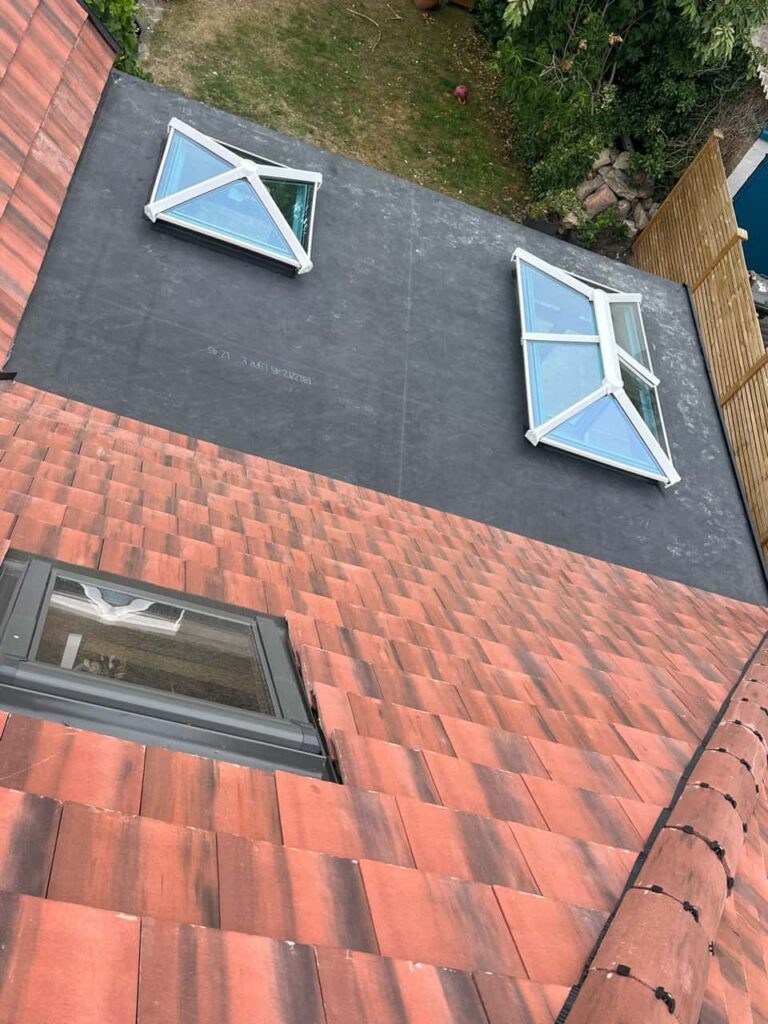
A roof leak can be frustrating, particularly when water continues to appear even after an obvious defect has been addressed. The visible damp patch inside a property is not necessarily located directly beneath the point where water is entering the roof. Water can travel along roofing materials, timber and other surfaces before becoming visible indoors.
For homeowners in Worksop, Nottinghamshire, persistent water ingress should be investigated carefully so that the actual source can be identified and the appropriate roof repair carried out.
Why Roof Leaks Can Be Difficult to Locate
Water does not always enter a roof in a straight line. Rain can penetrate through a damaged tile, flashing, roof junction or another vulnerable point before travelling to a different part of the roof space.
This means that repairing the area directly above an internal stain may not resolve the problem if the actual entry point is elsewhere.
Persistent leaks can also have more than one cause. A roof may have a damaged tile as well as deteriorated flashing or another weakness around a roof junction. A thorough inspection is therefore important when water ingress continues.
Start by Identifying Where Water Appears
The first step is to identify where the water is becoming visible inside the property. Look for damp patches, staining, peeling finishes or signs of moisture around the ceiling and upper walls.
If it is safe to do so, the loft space can provide additional clues. Damp timber, wet insulation or visible water marks may help indicate the direction from which water is travelling.
However, the point where moisture becomes visible should not automatically be assumed to be the source of the leak.
Check the Roof Covering
Broken, cracked or displaced roof tiles are common causes of water ingress. Even a relatively small gap can allow rainwater to reach the layers beneath the main roof covering.
A professional inspection can identify tiles that are damaged, loose or incorrectly positioned. The surrounding tiles should also be checked because movement or deterioration may affect more than one section.
Attempting to walk across the roof to inspect individual tiles is not recommended. Damaged roofing materials can be unstable, and walking on them can cause additional breakage.
Inspect Flashing and Roof Junctions
Flashing is used around areas where different parts of the roof meet, including chimneys, roof edges and other junctions. These areas can become vulnerable as materials age or deteriorate.
Loose, cracked or damaged flashing can allow rainwater to enter behind the roof covering. Because water can travel beneath the surface before appearing indoors, flashing-related leaks can sometimes be difficult to identify without a close inspection.
A professional roofer can assess these junctions and determine whether flashing repairs or replacement are required.
Check Valleys, Ridges and Other Vulnerable Areas
Roof valleys are designed to direct rainwater away from the roof, making them particularly important when investigating persistent leaks. Debris, deterioration or damage in these areas can interfere with effective water drainage.
Ridge tiles and their associated mortar or fixings can also deteriorate over time. Gaps or movement around the ridge can create additional points where water may enter.
Other roof penetrations and junctions should also be inspected when the source of a leak is not immediately obvious.
Consider When the Leak Appears
The timing of a leak can provide useful information. If water only appears during heavy rainfall or strong winds, the roof may have a localised vulnerability that is exposed under particular weather conditions.
A leak that continues during lighter rainfall may indicate a more persistent defect. However, the timing alone cannot identify the exact cause, so it should be considered alongside a physical inspection.
Keeping a record of when the leak appears can provide useful information for the roofer investigating the problem.
Why Professional Roof Leak Detection Matters
Persistent water ingress should be properly investigated rather than repeatedly treating the visible symptoms. Finding the actual entry point allows the repair to address the cause rather than simply covering up the resulting dampness.
Professional roof leak detection involves assessing the roof covering, flashing, junctions, drainage points and other potential sources of water ingress. The condition of the surrounding roof can also be checked to determine whether additional damage has occurred.
This approach can be particularly useful when a previous repair has not stopped the leak.
Professional Roof Leak Repairs in Worksop
Worksop Roofing Repairs provides professional roof inspection and repair services for properties in Worksop, Nottinghamshire. If you have a persistent leak, recurring damp patch or unexplained water ingress, a professional assessment can help establish where the water is entering and what repair may be required.
If you are struggling to identify the source of a roof leak in Worksop, contact Worksop Roofing Repairs to discuss the problem and arrange a suitable roof inspection.
Conclusion
Finding the source of a persistent roof leak is not always straightforward because water can travel beneath roofing materials before becoming visible inside the property. Damaged tiles, flashing, valleys, ridges and roof junctions can all contribute to water ingress.
For homeowners in Worksop, Nottinghamshire, professional roof leak detection can help identify the actual source of the problem and ensure that repairs address the underlying cause. Acting promptly when signs of water ingress appear can also help prevent further deterioration to the roof and interior of the property.
Call us on: 01909 498 198
Click here to find out more about Worksop Roofing Repairs
Click here to complete our contact form and see how we can help with your roofing needs.