When a roofing issue first appears, most homeowners naturally hope it can be resolved with a straightforward repair. In many situations, repairs are effective and appropriate. However, there are times when a roof reaches a condition where repairs are no longer enough to restore safety, reliability, or long-term performance. In these cases, a new replacement roof becomes the most sensible and dependable solution.
At Worksop Roofing Repairs in Worksop, Nottinghamshire, we regularly inspect roofs where repeated repairs have failed to provide lasting results. Understanding why some roofs cannot be repaired helps homeowners make informed decisions that protect their property for years to come.
When Repairs Only Address Symptoms, Not the Cause
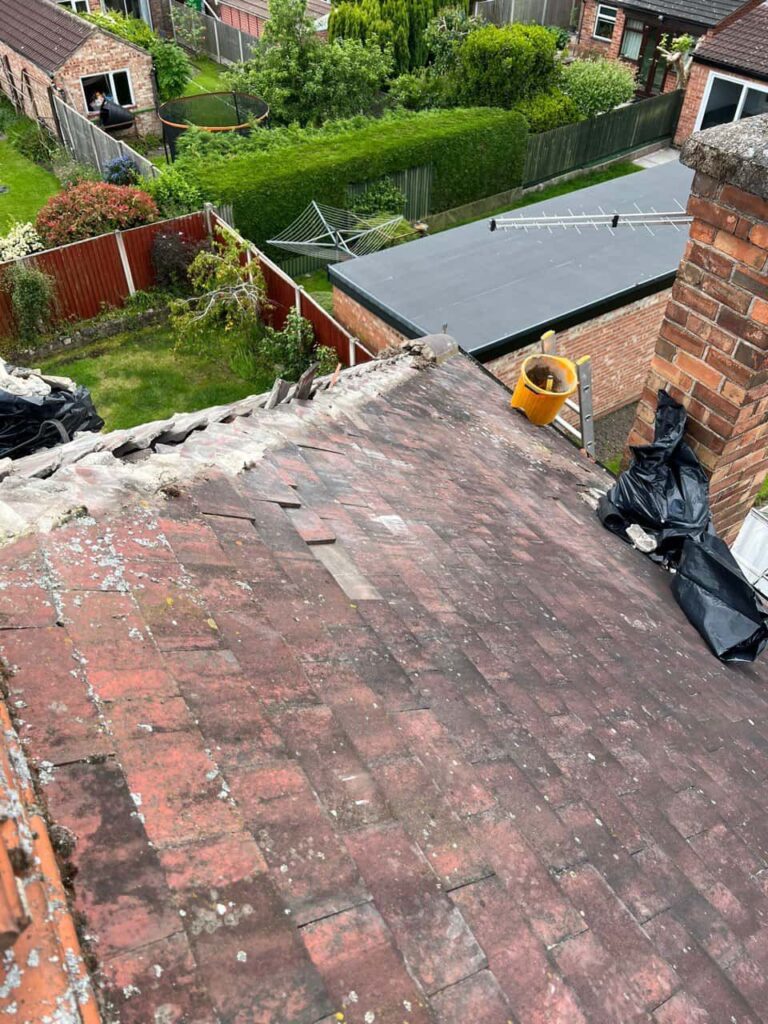
Roof repairs are designed to fix specific, localised faults such as a slipped tile or a small area of damaged flashing. However, if the underlying structure or multiple roofing components are failing together, repairs often only treat the visible symptoms.
Common signs include:
- Leaks that return in different locations
- Multiple problem areas appearing at once
- Repairs that fail shortly after completion
- Ongoing damp despite repeated fixes
These issues usually point to deeper deterioration within the roof system.
Extensive Underlay Failure
The underlay beneath the tiles acts as a critical secondary defence against wind-driven rain. Over time, especially on older roofs, underlay can become brittle, torn, or completely degraded.
When underlay failure is widespread:
- Water can enter even when tiles appear intact
- Leaks may occur during heavy or windy rain
- Moisture can spread across large roof sections
In these situations, repairing surface elements will not restore waterproofing. A full roof replacement is often the only effective option.
Structural Weakness and Roof Movement
A roof must remain properly aligned to function correctly. Long-term moisture exposure, ageing timbers, or past storm damage can weaken rafters, battens, and fixings. This can lead to sagging rooflines, uneven tile loads, and ongoing instability.
Structural problems cannot be resolved with surface-level repairs alone. Replacing the roof allows the entire framework to be corrected and rebuilt where necessary, restoring strength and alignment.
Multiple Components Failing at the Same Time
Roofs nearing the end of their lifespan often suffer from several issues simultaneously, such as:
- Cracked or brittle tiles
- Failing ridge mortar or fixings
- Worn flashing around chimneys and junctions
- Degraded underlay
- Poor ventilation contributing to moisture build-up
When several key elements are compromised, repairing each one individually rarely restores the roof as a complete system. A replacement ensures all components work together as intended.
Long-Term Moisture Damage
If water has been entering the roof for an extended period, hidden damage may already exist within timbers, insulation, and internal ceilings. Even after visible leaks are repaired, trapped moisture can continue to cause deterioration.
A new roof removes damaged materials entirely, preventing further spread and restoring a dry, healthy structure.
Roofs That Have Reached the End of Their Lifespan
Every roof has a finite lifespan. Once materials have weathered beyond their functional limits, repairs become increasingly ineffective. At this stage, continued patching often leads to repeated disruption without delivering long-term reliability.
Replacing the roof provides:
- A fully renewed weatherproof barrier
- Modern materials designed for durability
- Improved ventilation and drainage
- Long-term peace of mind
Conclusion
While repairs are suitable for many roofing problems, some roofs reach a condition where replacement is the only practical and reliable solution. Extensive underlay failure, structural weakness, widespread deterioration, and repeated leaks are all clear indicators that repairs can no longer provide lasting results.
If you are unsure whether your roof can still be repaired or may require replacement, Worksop Roofing Repairs in Worksop, Nottinghamshire is here to help. Contact us today to arrange a professional assessment and receive clear, honest advice on the best solution for your home.
Call us on: 01909 498 198
Click here to find out more about Worksop Roofing Repairs
Click here to complete our contact form and see how we can help with your roofing needs.